China Top 10 Mini E Car Types for Global Buyers
China’s Mini E Car market has moved from a niche experiment to a serious global buying opportunity. Small electric vehicles now appear in city streets, industrial parks, campuses, and compact delivery fleets. Their appeal is clear: low energy use, simple controls, tight turning circles, and easier parking. Yet size alone does not guarantee value.
This guide examines China’s top 10 Mini E Car types for global buyers. It compares urban commuter cars, neighborhood electric vehicles, compact family models, micro delivery vans, and small utility vehicles. Each category serves a different daily need. Some prioritize range. Others focus on cargo space, low maintenance, or affordable replacement parts. Battery chemistry, charging access, safety equipment, export support, and local road rules also require careful review.
Bill Russo, founder and CEO of Automobility Limited, has said, “China is the most competitive automotive market in the world.” That competition is visible in small electric cars. Manufacturers improve design quickly, but quality can vary between suppliers. A low purchase price may hide limited service coverage or uncertain parts availability. Buyers should inspect battery warranties, test charging compatibility, and verify certification requirements before ordering.
This list is practical, not absolute. The best Mini E Car depends on climate, roads, passenger needs, and ownership plans. A model that works beside a Shanghai metro station may struggle on a rural road elsewhere. That limitation matters. Global buyers need more than attractive photos; they need clear specifications, realistic range expectations, and dependable after-sales support.
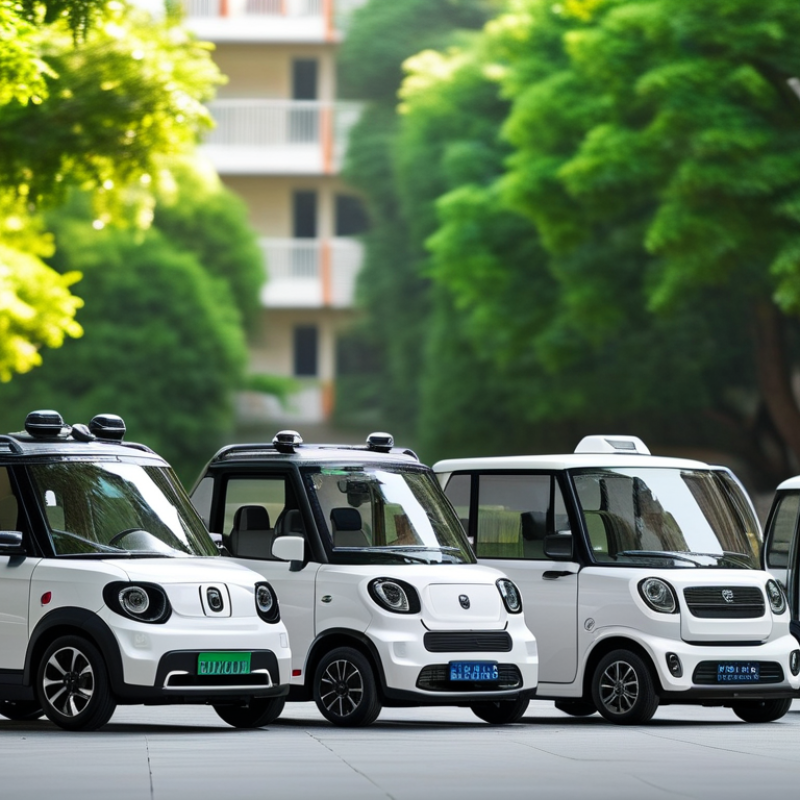
What Defines a Mini Electric Car in China
China Top 10 Mini E Car Types for Global Buyers
What Defines a Mini Electric Car in China
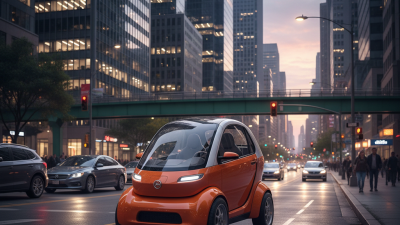
In China, a mini electric car is usually a compact battery vehicle designed for short urban trips. The term describes market positioning, not one universal legal class. Typical models have a short body, narrow width, limited seating, and modest battery capacity. Some definitions also include low-speed vehicles, but this boundary is not perfectly clean.
The China Association of Automobile Manufacturers reported strong growth in China’s new-energy vehicle market during 2023 and 2024. The International Energy Agency’s Global EV Outlook 2024 stated that China represented nearly 60% of global electric car sales in 2023. This scale supports lower-cost components, simpler interiors, and efficient city-focused engineering. A mini car may use a battery below 30 kWh and offer practical urban ranges around 100 to 300 kilometres, depending on testing conditions.
Size matters. A narrow body can fit older streets and crowded parking spaces. A turning radius near four metres feels useful beside dense apartment blocks. Yet, small dimensions can reduce luggage space, crash protection, and rear-seat comfort. Not every small EV is truly practical. Buyers should check certified range, charging standards, battery warranty, winter performance, and local safety approval. The IEA also notes that charging access strongly influences electric vehicle adoption. For global buyers, the smallest vehicle may be affordable, but after-sales support can remain uncertain.
China Top 10 Mini E Car Types for Global Buyers - What Defines a Mini Electric Car in China
| No. |
Mini EV Type |
Typical Body Definition |
Seats |
Typical Length |
Battery Capacity |
Typical CLTC Range |
Top Speed |
Best-Fit Use Case |
| 1 |
Ultra-Compact Two-Seater |
Very short two-door or single-row city car designed for the smallest urban parking spaces. |
2 |
2.5–3.0 m |
9–15 kWh |
100–180 km |
80–100 km/h |
Short commutes, dense city traffic and low-cost personal mobility. |
| 2 |
Three-Door Four-Seater |
A compact hatchback with two front doors and a rear hatch, usually prioritizing a small turning radius. |
4 |
3.0–3.4 m |
9–18 kWh |
120–220 km |
90–105 km/h |
Affordable daily travel for one to three occupants. |
| 3 |
Five-Door Urban Hatchback |
Small five-door body offering easier rear-seat access while remaining shorter than a conventional subcompact car. |
4 |
3.2–3.6 m |
13–22 kWh |
150–300 km |
100–115 km/h |
Family errands, commuting and urban delivery of small goods. |
| 4 |
Extended-Range Mini Hatchback |
A mini hatchback with a larger battery pack, improved thermal management and greater driving range. |
4 |
3.4–3.8 m |
20–32 kWh |
250–405 km |
110–130 km/h |
Longer daily commutes and occasional intercity travel. |
| 5 |
Mini Electric Convertible |
A two-seat or compact four-seat open-top electric car based on a small urban-car platform. |
2–4 |
3.0–3.5 m |
15–25 kWh |
150–280 km |
100–120 km/h |
Leisure driving, tourism zones and image-focused urban mobility. |
| 6 |
Mini Electric Crossover |
A raised mini body with higher seating, increased ground clearance and hatchback-style practicality. |
4–5 |
3.5–4.0 m |
25–40 kWh |
250–420 km |
120–140 km/h |
Small families, uneven urban roads and buyers wanting a higher driving position. |
| 7 |
Mini Electric MPV |
A tall-roof compact vehicle designed to maximize cabin space and flexible passenger or cargo loading. |
5–7 |
3.8–4.4 m |
30–50 kWh |
250–400 km |
100–130 km/h |
Family transport, hotel shuttles and compact passenger services. |
| 8 |
Mini Electric Cargo Van |
A compact commercial van with a box-shaped rear compartment and a payload-focused interior. |
2–5 |
3.5–4.5 m |
20–45 kWh |
180–350 km |
80–110 km/h |
Last-mile logistics, food delivery, maintenance and small-business transport. |
| 9 |
Mini Electric Utility Pickup |
A small electric pickup with a short wheelbase, compact cargo bed and low-speed commercial orientation. |
2–5 |
3.5–4.6 m |
20–45 kWh |
180–320 km |
80–110 km/h |
Agricultural areas, parks, facility maintenance and light cargo work. |
| 10 |
Shared-Mobility Mini EV |
A durable, easy-to-clean compact EV configured for frequent short trips and high utilization. |
2–4 |
2.8–3.6 m |
12–25 kWh |
120–280 km |
80–110 km/h |
Car-sharing, campuses, resorts, industrial parks and urban feeder transport. |
Reference note: Specifications are representative ranges for China-market mini electric vehicles rather than a single model. Driving range is generally quoted under the China Light-Duty Vehicle Test Cycle (CLTC); real-world range varies with temperature, speed, payload, terrain and climate-control use.
How China’s Mini E Cars Are Classified by Size and Use
China Top 10 Mini E Car Types for Global Buyers
China’s mini electric cars are classified more by dimensions and purpose than by one global standard. A practical inspection should check length, width, seating, battery size, and certified speed. The smallest type is the two-seat pocket city car, often under 3 meters long. It suits narrow streets and short daily trips. The next group includes four-seat urban cars, micro hatchbacks, and compact sedans. They offer more cabin space, but rear seats may feel tight. Cargo versions, enclosed delivery models, and small utility vans serve shops, campuses, and local services. Leisure models, accessible mini cars, and low-speed neighborhood vehicles complete the ten common types.
Use matters as much as size. A two-seat model may work well for a 10-kilometer commute, while a four-seat car handles school runs better. Cargo models need a flat floor and a useful payload, not only a larger battery. Campus vehicles usually emphasize easy entry and low operating costs. Accessible designs should provide wide doors, stable steps, and simple controls. Low-speed models can be practical in private communities, but buyers must verify road eligibility in their country.
Battery chemistry, charging plugs, braking performance, and weather protection deserve careful checks. Published range can drop sharply in cold weather or heavy traffic. I have found that a small body does not always mean simple maintenance. Some compact cars use specialized parts and limited service networks. That detail is easy to overlook. Buyers should compare independent inspection reports, warranty terms, crash equipment, and local certification before choosing a type.
China’s Top 10 Mini E Car Types for Global Buyers
China’s Top 10 Mini E Car Types for Global Buyers cover different daily travel needs.
Common categories include two-seat city cars, four-seat urban cars, enclosed electric quadricycles, compact hatchbacks, tiny sedans, micro SUVs, cargo mini vans, utility pickups, short-range commuter cars, and low-speed neighborhood vehicles. Their small bodies suit narrow streets, crowded parking areas, and short shopping trips. Many use lithium batteries, simple dashboards, and home-charging systems. Driving range varies sharply with temperature, load, road slope, and battery age. A stated range is not a promise.
For global buyers, practical checking matters more than attractive photos. Confirm battery chemistry, charging standards, voltage, safety equipment, software language, spare-part access, and local registration rules. A 2.5-meter vehicle may feel easy in a city, yet its limited luggage space becomes inconvenient quickly. Some models have modest crash protection or weak heating performance. That does not make them useless, but it requires honest route planning. Ask for independent inspection records and clear warranty terms. Local compliance should be verified before payment.
Tips: Match the vehicle to your real route, not your weekend imagination. Test charging at home or work. Measure your parking space. Check seat comfort and visibility in person, if possible. Keep extra budget for adapters, tires, insurance, and maintenance. Imported support can be slower than expected. Even careful buyers may overlook battery replacement costs. That small detail deserves serious attention.
Key Specifications, Safety Features, and Charging Options
China Top 10 Mini E Car Types for Global Buyers
China’s ten mini electric car types cover two-seat runabouts, four-seat hatchbacks, micro-SUVs, compact MPVs, and small cargo vans. Typical battery packs range from 6 to 25 kWh. Claimed driving ranges often reach 100–300 kilometers, but temperature, speed, and payload reduce real results. The IEA’s Global EV Outlook 2024 reported more than four million public charging points worldwide by the end of 2023. Public charging networks also grew by over 40% that year. Small cars now have more charging choices.
Safety requires closer inspection than a colorful dashboard suggests. Buyers should verify local approval, battery protection, electronic stability control, airbags, and braking assistance. UNECE Regulation No. 100 addresses electric powertrain and rechargeable battery safety. Independent crash-test results remain useful, although not every mini car receives a global assessment. A low price is not a safety specification. This is where some comparisons feel incomplete.
Charging hardware must match the destination market. Many models use single-phase AC charging at 3.3 or 6.6 kW. Some higher-specification versions add DC charging between 20 and 40 kW. Type 2, CCS2, and GB/T connectors are not automatically interchangeable. A 12 kWh battery may need about four hours on a 3.3 kW home charger. DC charging can reduce that time considerably. However, advertised charging speeds may depend on battery temperature and charger availability. Range figures can disappoint. Real household use is less tidy.
China Top 10 Mini E-Car Types for Global Buyers
Indicative battery capacity by mini electric vehicle type, based on commonly available specifications in the Chinese and international markets.
How to read the chart
Smaller two-seat vehicles generally use 6–15 kWh batteries for short urban trips, while four- and five-seat mini EVs commonly use 20–40 kWh packs. Larger urban crossovers, microvans, and utility models may reach approximately 45 kWh. Typical charging options include household AC charging at around 2.3–3.6 kW, upgraded AC charging at 7.4 kW, and 11 kW AC on selected larger vehicles. DC fast charging, where available, is commonly rated between 20 and 50 kW.
For safety, global buyers should check for electronic stability control, anti-lock braking, airbags, ISOFIX child-seat anchors, battery protection, tire-pressure monitoring, and available autonomous emergency braking. Equipment and test ratings can vary by market, trim level, and homologation standard.
How to Choose the Right Chinese Mini E Car for Your Market
China Top 10 Mini E Car Types for Global Buyers
Choosing the right Chinese mini electric car starts with market research, not showroom appearance. The IEA’s Global EV Outlook 2024 reported nearly 14 million electric car sales worldwide in 2023. China accounted for about 60% of global sales. However, national demand does not guarantee overseas suitability.
Match the vehicle type to daily use. Two-seat city cars suit dense streets and short commutes. Four-seat models offer better family practicality. Small electric vans may serve urban deliveries. Check battery capacity, real-world range, charging standards, and ground clearance. A 200-kilometer laboratory range may fall sharply in winter, heavy traffic, or hilly areas. Test data can disappoint.
Look beyond the purchase price. Battery warranty, spare-part access, software language, and technician training affect total ownership cost. The IEA notes that public charging expansion remains essential as electric vehicle adoption grows. Your market may need home chargers instead. Review crash requirements, lighting rules, electromagnetic standards, recycling duties, and import documentation before ordering. Regional certification can change the business case. I would avoid selecting a model only because it is cheap. That decision often ignores after-sales risk. Smaller wheels may reduce energy use, but poor tires can weaken wet-road control. Ask for independent test evidence, not only seller figures. Some buyers also overlook cabin heating, which can reduce winter range considerably.